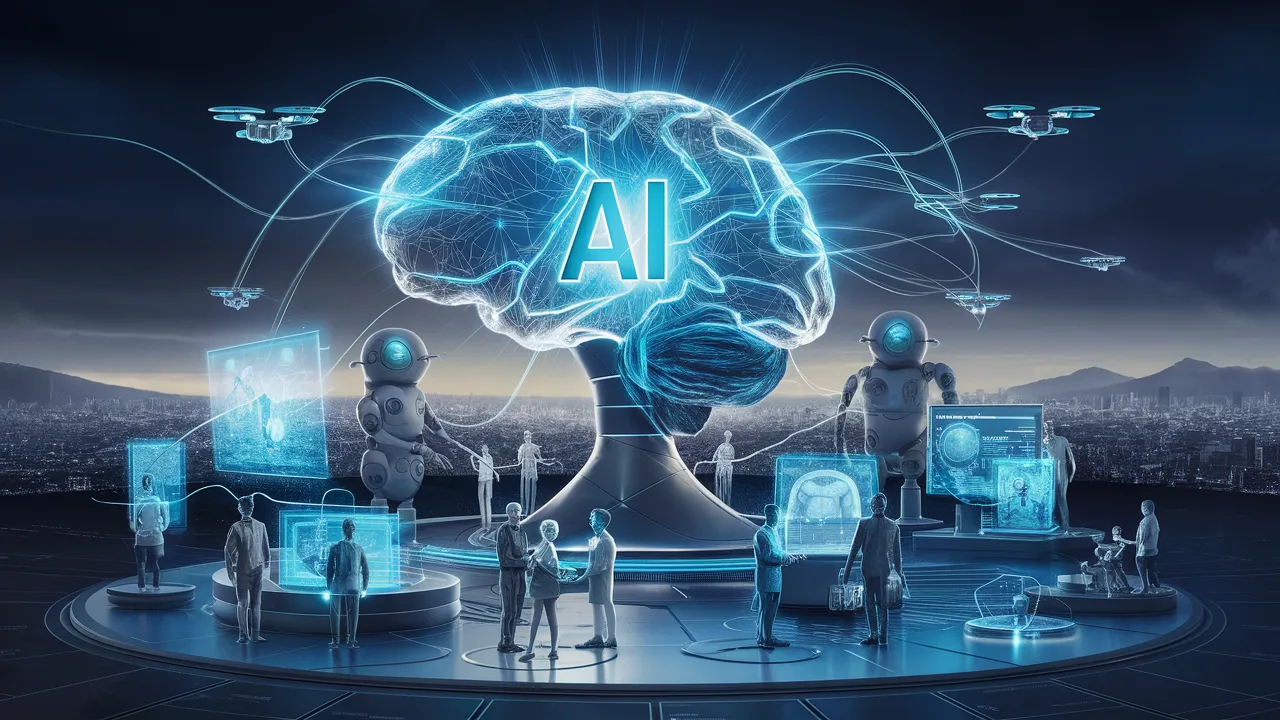

Artificial Intelligence (AI) has become one of the most transformative technologies of the 21st century. It refers to the simulation of human intelligence in machines that are programmed to think, learn, and make decisions. From voice assistants to self-driving cars, Artificial Intelligence (AI) is rapidly reshaping how we live, work, and interact with technology.
The focus keyword, Artificial Intelligence (AI), plays a central role in modern innovation. Businesses, governments, and individuals are increasingly relying on AI-driven solutions to improve efficiency, accuracy, and productivity.
What is Artificial Intelligence (AI)?
Artificial Intelligence (AI) is a branch of computer science that focuses on creating systems capable of performing tasks that would normally require human intelligence. These tasks include problem solving, decision-making, speech recognition, and visual perception.
AI systems are powered by algorithms and data. The more data they process, the more accurate and intelligent they become. This ability to learn from experience is what makes artificial intelligence (AI) so powerful and unique.
Types of Artificial Intelligence (AI)
1. Narrow AI
Narrow AI, also known as weak AI, is designed to perform a specific task. Examples include virtual assistants, recommendation systems, and chatbots. Most artificial intelligence (AI) applications today fall into this category.
2. General AI
General AI refers to machines that can perform any intellectual task that a human can. This level of artificial intelligence (AI) is still theoretical and in the development stages.
3. Superintelligent AI
Superintelligent AI surpasses human intelligence in all aspects. While this form of Artificial Intelligence (AI) is still speculative, it raises important ethical and philosophical questions.
Applications of Artificial Intelligence (AI)
Healthcare
Artificial Intelligence (AI) is revolutionizing healthcare by enabling early disease detection, personalized treatments, and robotic surgeries. AI-powered tools can analyze medical data faster and more accurately than humans.
Education
In education, Artificial Intelligence (AI) helps create personalized learning experiences. Intelligent tutoring systems adapt to students’ needs, improving learning outcomes.
Business and Finance
Businesses use Artificial Intelligence (AI) for data analysis, customer service, fraud detection, and automation. AI tools help companies make better decisions and improve efficiency.
Transportation
Self-driving cars and smart traffic systems rely on Artificial Intelligence (AI) to improve safety and reduce congestion.
Entertainment
Streaming platforms use Artificial Intelligence (AI) to recommend content based on user preferences, enhancing user experience.
Benefits of Artificial Intelligence (AI)
Increased Efficiency
Artificial Intelligence (AI) automates repetitive tasks, saving time and resources.
Improved Accuracy
AI systems reduce human error, especially in data-driven processes.
24/7 Availability
Unlike humans, Artificial Intelligence (AI) systems can operate continuously without breaks.
Innovation and Growth
AI drives innovation across industries, creating new opportunities and business models.
Challenges of Artificial Intelligence (AI)
Job Displacement
One of the biggest concerns about Artificial Intelligence (AI) is the potential loss of jobs due to automation.
Ethical Issues
AI raises ethical questions about privacy, bias, and decision-making.
High Costs
Developing and implementing Artificial Intelligence (AI) systems can be expensive.
Security Risks
AI systems can be vulnerable to cyberattacks and misuse.
The Future of Artificial Intelligence (AI)
The future of Artificial Intelligence (AI) is incredibly promising. As technology continues to evolve, AI will become more advanced and integrated into everyday life. Innovations such as smart cities, advanced robotics, and autonomous systems will rely heavily on Artificial Intelligence (AI).
Researchers are also working on making AI more ethical and transparent. The goal is to ensure that Artificial Intelligence (AI) benefits all of humanity while minimizing risks.
Artificial Intelligence (AI) in Everyday Life
Artificial Intelligence (AI) is already a part of our daily lives. From smartphone assistants to online shopping recommendations, AI is everywhere. It helps us navigate traffic, manage schedules, and even control smart home devices.
As Artificial Intelligence (AI) continues to evolve, its presence in everyday life will only increase. Understanding how it works and its impact is essential for adapting to the future.
Conclusion
Artificial Intelligence (AI) is no longer a futuristic concept—it is a present reality shaping the world around us. Its applications span across industries, improving efficiency, accuracy, and innovation. While there are challenges associated with Artificial Intelligence (AI), its benefits far outweigh the risks when managed responsibly.
As we move forward, embracing Artificial Intelligence (AI) will be crucial for progress and development. By understanding its potential and addressing its challenges, we can ensure a future where AI enhances human capabilities and improves quality of life for everyone.